
NEWS
2026-03-12
A wireless vehicle camera system is a safety monitoring solution that transmits video from cameras to a display without physical cables. Using 2.4 GHz wireless transmission and frequency-hopping technology, these systems provide stable real-time video for blind-spot monitoring, reversing assistance, and operational safety. They are widely used in construction and agricultural machinery, and construction equipment, where complex structures make wired installations difficult.
Construction and agricultural machinery can operate with wired camera systems. However, due to harsh environments, complex vehicle structures, and high operational continuity requirements, wired systems often expose structural limitations that wireless solutions are better equipped to address.
Heavy equipment such as mining trucks, tractors, and harvesters operate under constant vibration and exposure to dust, mud, and moisture. In wired systems, long cables and connectors may wear out, loosen, or corrode over time, leading to signal failures.
Construction machinery vary greatly in size and design. Routing cables through cabins, frames, or articulated joints can increase installation time and make maintenance more difficult.
Construction machinery like mining and agriculture rely on equipment that operates continuously. Monitoring systems must therefore remain reliable and easy to maintain without causing long downtime.
These factors make wireless camera systems a more practical monitoring solution for off-road vehicles.
Wireless vehicle camera systems improve monitoring efficiency and reliability by reducing physical installation complexity and providing stable video transmission.
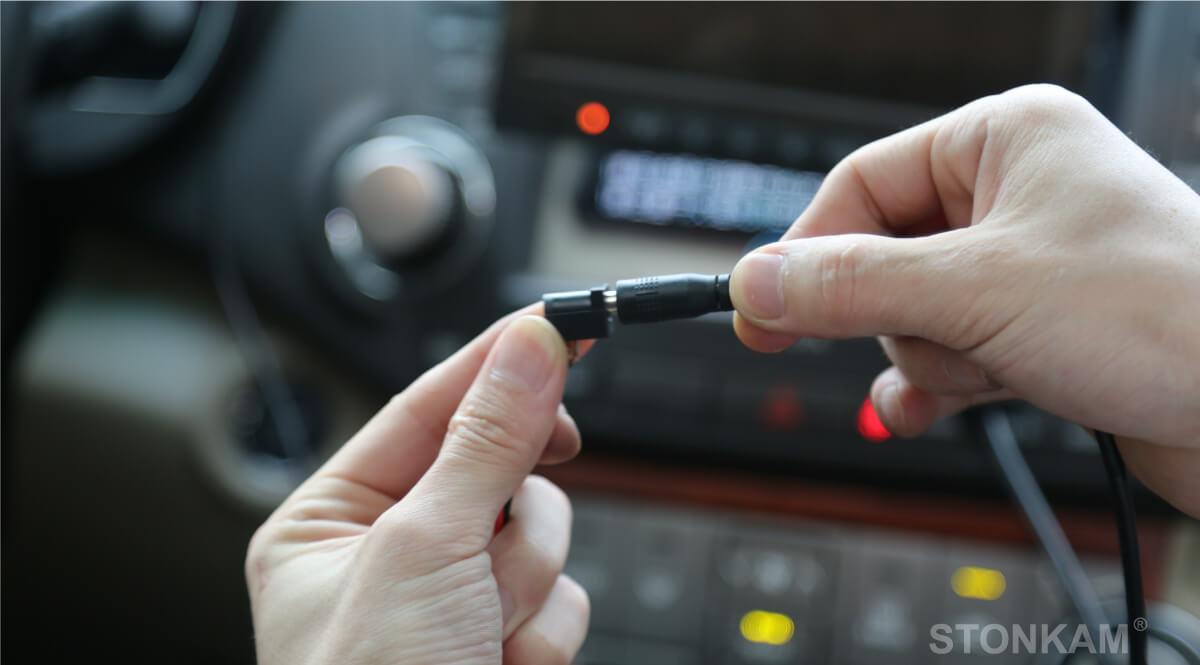
Without complex cables, wireless vehicle cameras can be installed quickly on different vehicles. STONKAM wireless vehicle camera systems feature a touchscreen monitor and magnetic camera base, allowing flexible and fast deployment.
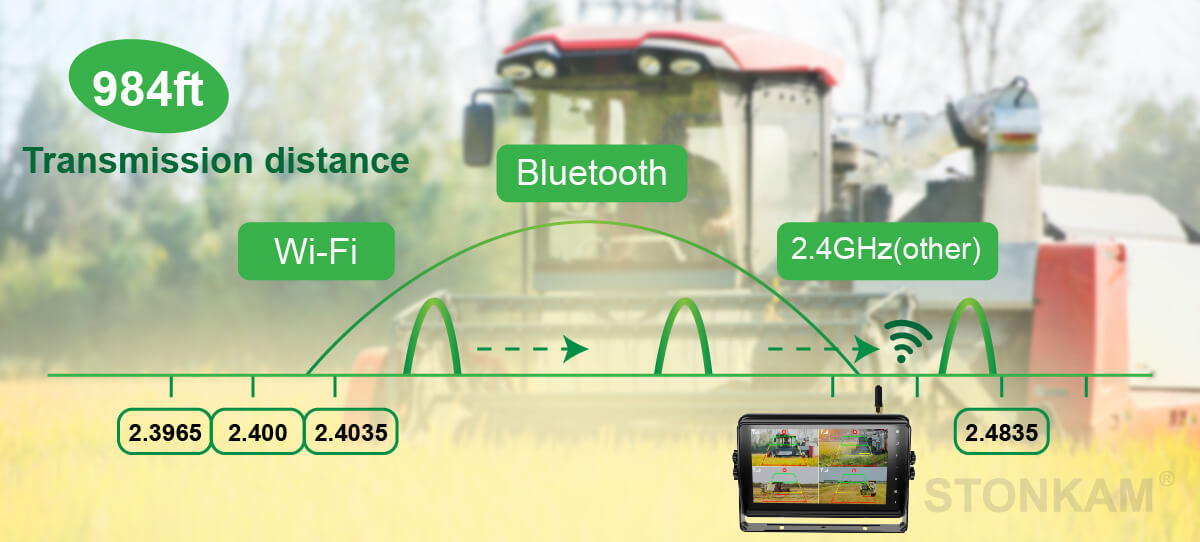
Operating within the 2408–2478 MHz frequency band, STONKAM wireless vehicle camera system provides stable video signals even in demanding environments. It support up to 984 ft (300 m) transmission distance, helping operators maintain clear visibility of blind spots and surrounding areas.
To mitigate collision risks in blind spots during operations, STONKAM wireless vehicle cameras can be paired with AI monitors. The monitor incorporate artificial intelligence detection algorithms capable of identifying workers, observers, or nearby heavy equipment. Real-time alerts help reduce blind spot accidents and enhance workplace safety.
Mining trucks operate in harsh environments with heavy vibration, dust, and large blind spots, where wired systems are prone to cable damage and signal failure. Maintenance and troubleshooting on large vehicles can also be time-consuming.
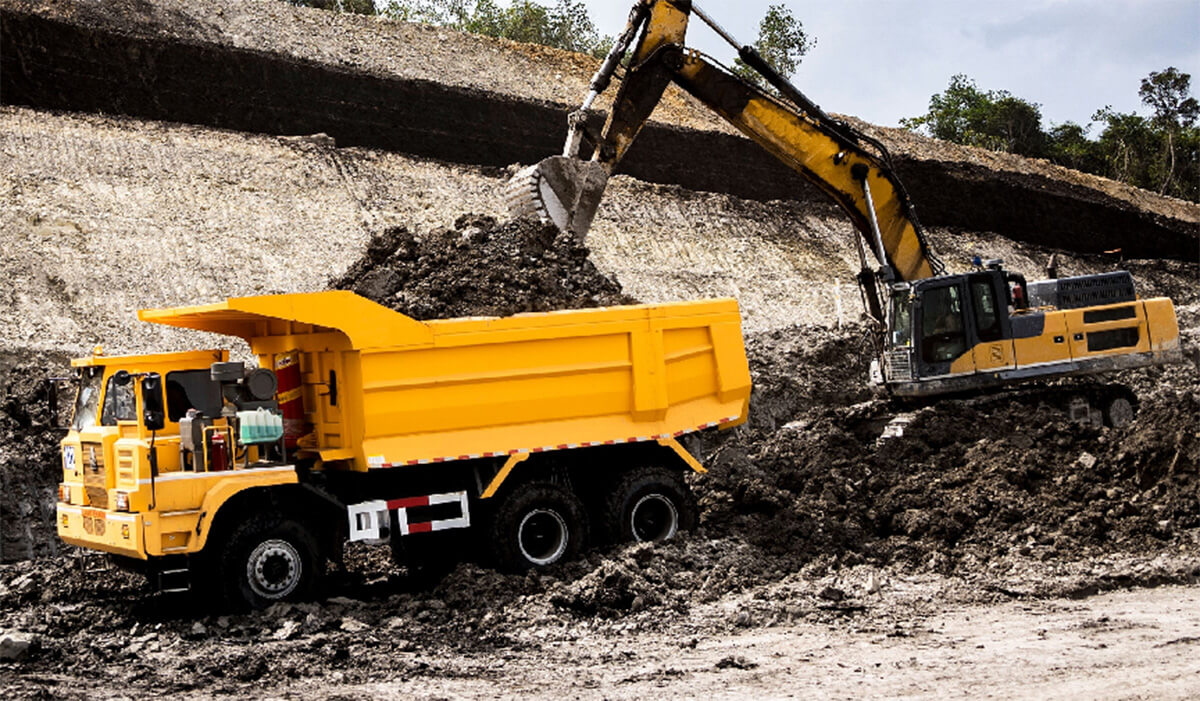
Wireless vehicle camera systems eliminate exposed cables and provide stable transmission through frequency-hopping technology in the 2408–2478 MHz band, reducing maintenance and downtime. The system also supports remote monitoring and remote-controlled operations, allowing operators to maintain real-time visibility of the vehicle and surrounding environment from a safe distance. This improves blind-spot awareness and enhances operational safety in mining sites.
Agricultural machinery operates in dusty, muddy environments and often requires flexible deployment across different machines during busy seasons.

Wireless vehicle camera systems enable quick installation without complex wiring and can be easily repositioned between vehicles. With improved camera visibility, operators can perform more precise reversing, alignment, and attachment monitoring, helping increase efficiency and safety during field operations
No. STONKAM wireless vehicle camera systems do not require internet access. They use direct radio transmission, typically within the 2.4 GHz band, to send video from the camera to the monitor.
Transmission range varies by product. STONKAM wireless camera systems can support distances up to 300 m (984 ft) under open conditions, ensuring stable monitoring even on large construction or mining vehicles.
Wireless cameras are often better for construction and agricultural machinery because they eliminate complex cable routing and reduce maintenance issues caused by vibration, dust, and moisture.
Yes. STONKAM wireless vehicle camera systems feature IR-CUT and infrared night vision, ensuring clear image recording in low-light conditions. The night vision range reaches up to 10 meters, helping maintain safe vehicle operation at night.
STONKAM AI monitors feature an IP66 waterproof housing, while the vehicle camera is rated IP69K, ensuring reliable operation in rain, snow, or dusty environments.
STONKAM CO., LTD
Add: 1/F.,#6Building,Huangzhou Industrial Park, Chebei Rd.,Tianhe,510660 Guangzhou,China
Tel: (86-20)6667 0988
Fax: (86-20)6667 0977
E-mail: sales@stonkam.com
WhatsApp: +86-15521270579; +86-15708917305

Copyright ©2002-2022 STONKAM CO.,LTD. 广州敏视数码科技有限公司 ALL Rights Reserved. 广东省通信管理局 粤ICP备05043268号





 AI intelligent systems
  AIoT
AIoT  360° Vision Systems
  Intelligent Terminal
  HD Monitors
  AHD Cameras
  Digital Cameras
  CMS
CMS  AI Wireless
  Regulations
  Thermal Cameras
  OEM Solutions
  Industry Applications
 Successful Case
  News
News
 Videos Center
 Introduction
  Why STONKAM®
  Culture
  Milestone
  Certificates
  Contact Us
 Support