
NEWS
2026-03-02
In modern fleet management, safety, compliance, and risk control are no longer optional — they are operational priorities. For fleets operating in logistics, public transport, mining, or construction, MDVR is not just a recording device — it is a risk management and operational control system.
MDVR (Mobile Digital Video Recorder) is an advanced onboard video and data recording system designed specifically for commercial vehicles. Unlike consumer dashcams, MDVR systems support multi-channel recording, GPS tracking, 4G/5G connectivity, and centralized fleet management platforms.MDVR systems are built for fleet-level visibility, centralized monitoring, and regulatory documentation.
It is widely used in logistics and delivery fleets, public transportation buses, school buses, mining trucks, construction vehicles, and law enforcement vehicles.
MDVR systems simultaneously record road conditions, driver behavior, passenger activity (for buses), vehicle speed and route history, and real-time GPS location. This multi-angle synchronized recording provides a complete operational picture, which is critical for accident investigation and safety improvement.
Commercial fleets face increasing safety pressure, insurance costs, and regulatory scrutiny. Without MDVR, several operational risks remain unmanaged.
In accident cases, fleets without video evidence may struggle to prove fault. This can lead to fraudulent insurance claims, extended legal disputes, and higher settlement costs. Clear video evidence significantly accelerates claim resolution and protects fleet operators from false accusations.
Common fleet risks include speeding, harsh braking, distracted driving, fatigue driving, and unauthorized vehicle use. Without monitoring and data feedback, these behaviors often go uncorrected.
Fleet managers without remote access face delayed emergency response, reduced dispatch efficiency, and lack of operational transparency.
In regulated markets such as the United States, fleets overseen by the Federal Motor Carrier Safety Administration must maintain safety documentation and compliance records. Lack of reliable data can complicate audits and investigations.
With 4-8 synchronized cameras, MDVR captures comprehensive footage of incidents. Video-backed evidence often determines liability quickly and objectively.
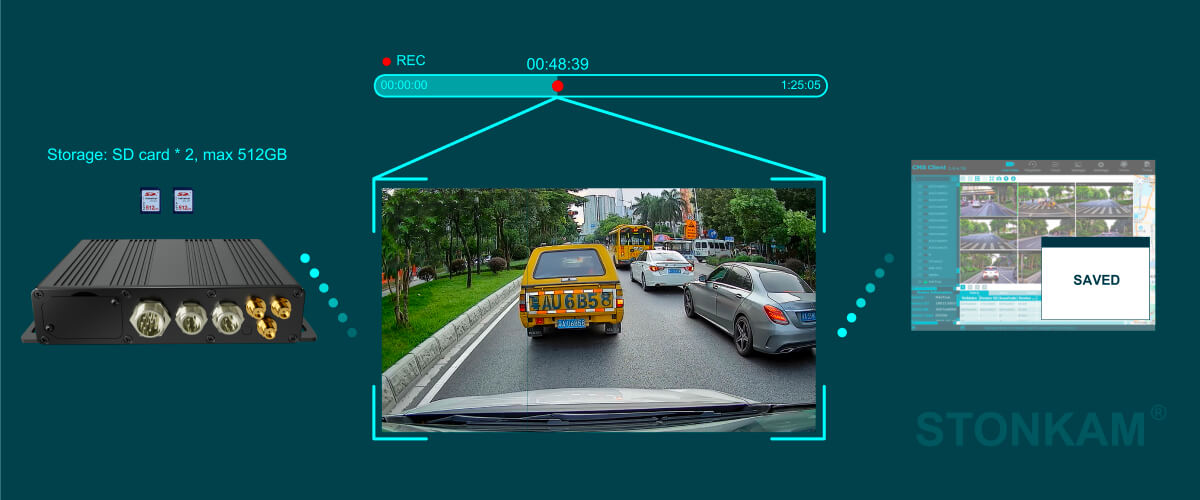
STONKAM MDVR supports full HD images, IPC and thermal imager input, and RTSP video output; it also supports user-defined resolutions and allows for previewing or playback of videos/images at any time.This protects fleets from fraudulent claims, reduces legal risk, and shortens insurance claim processing time.
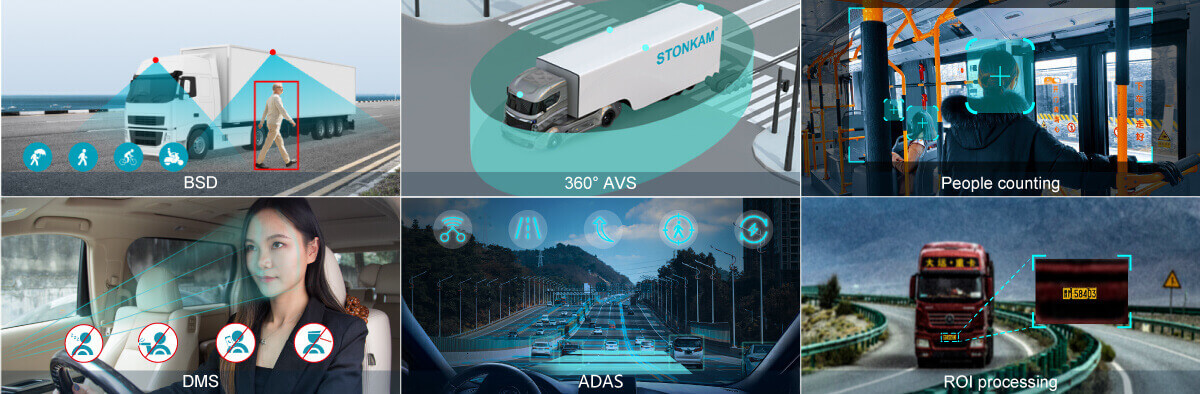
When trips are monitored and recorded, risky driving events decrease, drivers become more accountable, and training programs become data-driven. Many fleets report measurable reductions in unsafe driving events after implementing video telematics systems. STONKAM MDVR supports the DMS algorithm, which will issue an audible and visual alarm if any abnormal driving behavior occurs (such as fatigued driving, distracted driving, smoking, making a phone call, not wearing a seatbelt, or no driver present).
With 4G/5G connectivity, fleet managers can access live video remotely, receive instant alerts, monitor geo-fencing violations, and respond to emergencies immediately. This is especially critical for school buses and public transportation systems.
Modern MDVR systems can integrate with a variety of AI algorithms. STONKAM MDVR Integrates 360 AVM, BSD, ADAS, and DMS algorithms. Supports the selection of different algorithm combinations based on application scenarios and can run multiple AI algorithms simultaneously to handle diverse AI tasks efficiently. These proactive alerts help prevent accidents before they occur.
MDVR assists fleets in archiving driving data, maintaining compliance records, supporting safety audits, and providing documented incident evidence. In highly regulated industries, this documentation can be critical during inspections or investigations.
STONKAM MDVR support real-time positioning, historical track query, remote download recording, electronic fence and other special functions; Dangerous driving events and abnormal vehicle staus can be uploaded to fleet monitoring platform. This strengthens regulatory compliance and enables data-driven fleet management.
.jpeg)
When selecting an MDVR system, consider:
Ensure support for at least 4–8 cameras to cover all blind spots.
Reliable transmission ensures real-time monitoring and alerts.
Choose a system that supports the integration of different algorithms to achieve proactive security protection. For example, STONKAM MDVR integrates 360 AVM, BSD, ADAS, and DMS algorithms, and allows for different algorithm combinations depending on the application scenario.
Looking for encrypted storage solutions with ample capacity. STONKAM MDVR features a dual SD card design, supporting up to 1TB of storage space, extending recording time and providing data redundancy.
.jpeg)
STONKAM MDVR supports SSL encryption and HTTPS secure transmission, supports Amazon S3 storage to ensure data security, and supports supercapacitor power failure protection to prevent data file loss due to sudden power outages.
The MDVR should integrate seamlessly with your fleet management software. STONKAM MDVR compatible with CMSV6/WIALON platforms and JT808 protocol, automatically upload data
Verify that the system meets regional transportation and safety standards.
The main purpose of an MDVR is to record synchronized multi-camera video and vehicle data while enabling remote monitoring and fleet-level management.
MDVR itself is not always legally required, but it helps fleets meet safety documentation and compliance requirements in regulated markets.
Most professional MDVR systems support 4–8 channels.
Yes. Many insurers view video telematics systems as risk-reduction tools, which can help lower premiums and minimize fraud-related losses.
Dashcams are usually limited to one or two cameras and are designed for individual vehicle recording. MDVR systems support multiple channels, real-time remote monitoring, GPS tracking, AI integration, and centralized fleet management, making them suitable for commercial fleet operations.
If you are looking to enhance the safety and efficiency of your fleet or equipment and obtain a customized MDVR systems, welcome to visit the STONKAM official website to learn more about our products and technical support.
STONKAM CO., LTD
Add: 1/F.,#6Building,Huangzhou Industrial Park, Chebei Rd.,Tianhe,510660 Guangzhou,China
Tel: (86-20)6667 0988
Fax: (86-20)6667 0977
E-mail: sales@stonkam.com
WhatsApp: +86-15521270579; +86-15708917305
Copyright ©2002-2022 STONKAM CO.,LTD. 广州敏视数码科技有限公司 ALL Rights Reserved. 广东省通信管理局 粤ICP备05043268号




 AI intelligent systems
  AIoT
AIoT  360° Vision Systems
  Intelligent Terminal
  HD Monitors
  AHD Cameras
  Digital Cameras
  CMS
CMS  AI Wireless
  Regulations
  Thermal Cameras
  OEM Solutions
  Industry Applications
 Successful Case
  News
News
 Videos Center
 Introduction
  Why STONKAM®
  Culture
  Milestone
  Certificates
  Contact Us
 Support