
NEWS
2026-03-04
文件名url:Vehicle-wireless-Monitoring-systems
seo标题:What Are Vehicle Wireless Monitoring System and Why Do Industrial and Agricultural Vehicles Need Them?
描述:Discover how Vehicle Wireless Monitoring System enhance safety, efficiency, and compliance for industrial and agricultural vehicles. Learn about real-time monitoring, easy installation, and intelligent detection features.
关键词:Vehicle Wireless Monitoring System、Vehicle wireless camera systems、industrial vehicles, agricultural vehicles
正文:出现5-8次核心关键词,并覆盖近义词、场景词
I. What are Vehicle Wireless Monitoring systems?
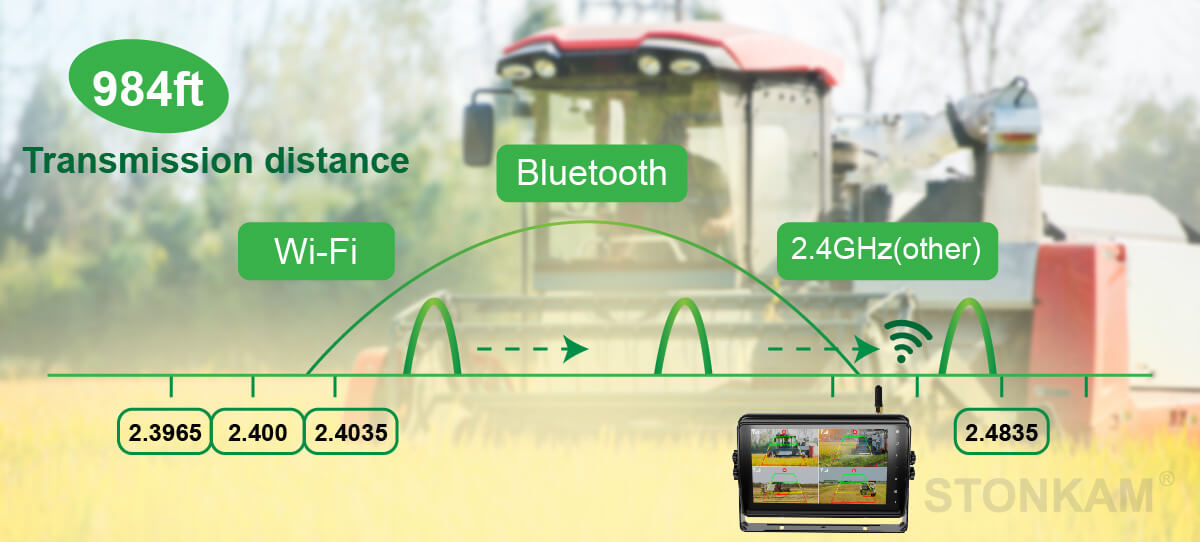
A wireless camera system is a visual surveillance solution consisting of a camera and a monitor that can transmit video signals without the need for physical cables between the camera and the monitor or recording device. Instead of relying on wired connections, these systems operate within the 2408–2478 MHz frequency band and utilize frequency-hopping transmission technology to deliver video signals.
II. Why Do Industrial and Agricultural Vehicles Need Vehicle Wireless Monitoring systems?
Industrial and agricultural vehicles can operate with wired camera systems. However, due to harsh environments, complex vehicle structures, and high operational continuity requirements, wired systems often expose structural limitations that wireless solutions are better equipped to address.
Off-road vehicles like mining trucks, tractors, and harvesters face constant vibration, dust, mud, and moisture. Wired systems with long cables and multiple connectors are vulnerable to wear, loosening, and corrosion, which can cause signal failure. In high-value operations, even minor faults can lead to costly downtime and reduced safety.
Industrial vehicles vary greatly in size, articulation structure, and chassis design. Installing wired cameras often requires routing cables through long, enclosed paths across cabins, frames, and articulated joints.
This results in:
●Longer installation time
●Increased labor cost
●Difficult troubleshooting
●Limited adaptability across different vehicle models
For fleets managing mixed equipment types, customizing wiring layouts for each model reduces deployment efficiency.
Safety monitoring is vital for audits, insurance, and compliance. Wired systems can fail due to aging cables or damage, and adding cameras requires complex rewiring. Industries needing high uptime and reliable records require more stable, scalable solutions.
III. How Do Vehicle Wireless Monitoring systems Solve These Problems?
Vehicle Wireless Monitoring systems are designed to directly reduce physical failure risks, simplify deployment, and improve long-term operational stability in harsh environments.
By operating within the 2408–2478 MHz frequency band and utilizing frequency-hopping transmission technology, wireless systems eliminate long external cable runs. This reduces exposure to vibration-related wear, dust ingress, and connector loosening. Fewer physical connection points mean fewer failure risks, resulting in more stable image transmission in demanding industrial conditions.
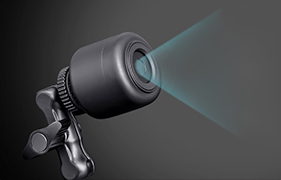
The stonkam Vehicle Wireless Monitoring System is easy to install, features a touchscreen display, and has a magnetic base for the camera, making installation simple, convenient, and highly flexible.

Without complex wiring requirements, wireless systems significantly shorten installation time. They can be deployed more quickly across different vehicle models without extensive structural modifications.
This improves:
●Fleet-wide scalability
●Seasonal deployment efficiency (especially in agriculture)
●Equipment transfer flexibility
●Reduced vehicle downtime during installation
The stonkam Vehicle Wireless Monitoring System boasts an open transmission range of up to 984 feet, with a stable and interference-resistant signal. Even at high speeds or long distances, the display provides real-time visibility of the surrounding environment, allowing for easy remote monitoring of your driving or operations without interference, flickering, blurring, or delays.
The stonkam Vehicle Wireless Monitoring System leverage deep learning algorithms to provide intelligent, high-precision detection of pedestrians and vehicles. The system can recognize different types of pedestrians—including cyclists, e-bike riders, and pedestrians on foot—as well as various vehicle types such as trucks, construction vehicles, and forklifts. By delivering real-time alerts, these smart algorithms assist drivers in avoiding collisions and improving operational safety in industrial and off-road environments.
IV. Industry Application Scenarios


Mining vehicles operate in harsh environments with large blind spots, where vibration and dust quickly wear down wired systems, increasing the risk of signal failure. Troubleshooting cables on oversized trucks is time-consuming and costly, especially when equipment is frequently relocated.
Vehicle Wireless Monitoring System eliminate long exposed cable runs, maintain stable video transmission using frequency-hopping technology in the 2408–2478 MHz band, reduce maintenance needs, shorten repair time, and allow easier redeployment across vehicles. This not only improves blind-spot visibility but also minimizes unexpected downtime and enhances operational continuity in high-value mining operations.
Agricultural tractors and harvesters operate in conditions with vibration, dust, mud, and moisture that accelerate hardware wear. Seasonal use and varied vehicle models require monitoring systems that are flexible and easy to deploy.
Vehicle Wireless Monitoring System enable rapid installation without complex wiring, reduce the risk of dust- and moisture-related failures, and allow easy repositioning between machines. With camera-assisted visibility, operators can improve precision in alignment, reversing, and attachment monitoring, while the wireless setup ensures minimal preparation time and faster seasonal deployment.
FAQ
Yes. Many wireless systems transmit video directly to in-vehicle monitors via local point-to-point connections, allowing real-time viewing without relying on external network coverage.
Off-road Vehicle Wireless System typically require IP66 or higher ratings to withstand dust, mud, and water exposure, ensuring reliable operation in mining, agricultural, and construction environments.
STONKAM CO., LTD
Add: 1/F.,#6Building,Huangzhou Industrial Park, Chebei Rd.,Tianhe,510660 Guangzhou,China
Tel: (86-20)6667 0988
Fax: (86-20)6667 0977
E-mail: sales@stonkam.com
WhatsApp: +86-15521270579; +86-15708917305

Copyright ©2002-2022 STONKAM CO.,LTD. 广州敏视数码科技有限公司 ALL Rights Reserved. 广东省通信管理局 粤ICP备05043268号





 AI intelligent systems
  AIoT
AIoT  360° Vision Systems
  Intelligent Terminal
  HD Monitors
  AHD Cameras
  Digital Cameras
  CMS
CMS  AI Wireless
  Regulations
  Thermal Cameras
  OEM Solutions
  Industry Applications
 Successful Case
  News
News
 Videos Center
 Introduction
  Why STONKAM®
  Culture
  Milestone
  Certificates
  Contact Us
 Support