How to Choose an AI Forklift Monitoring System for Retrofit and OEM Projects
Which AI Forklift Monitoring System Suits Your Operating Conditions?
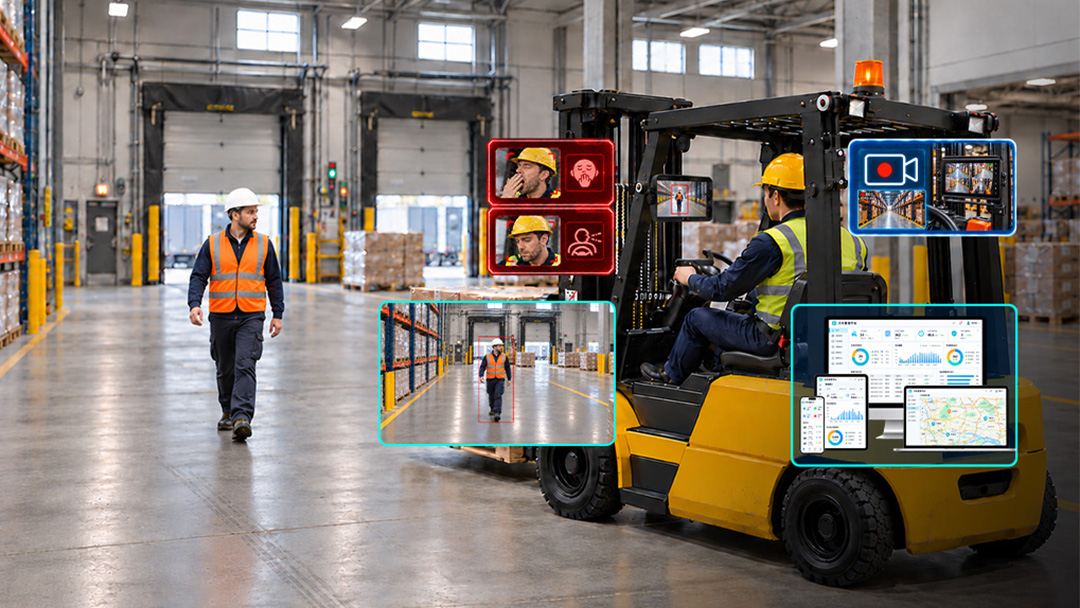
Forklift operations in warehouses, logistics centers, and manufacturing facilities involve different challenges, from precise pallet handling and limited visibility to pedestrian‑vehicle interaction and multi‑vehicle management. AI forklift monitoring systems combine object detection, active warnings, and operational data collection to address these needs.
STONKAM provides four types of intelligent forklift monitoring solutions. Each addresses specific operational requirements and can be configured according to forklift models, working environments, and fleet management needs.
|
Operating Scenario |
Recommended Solution |
What to Verify |
|
Warehouse operations involving frequent pallet handling, precise fork positioning, and video recording requirements |
Check the view of the forks and pallets at representative lift heights. |
|
|
Narrow aisles, frequent turning, and reversing |
Check surround‑view coverage during turns and reversing, with and without a load. |
|
|
Warehouse aisles, loading areas, and mixed pedestrian‑vehicle environments |
Test detection zones and verify who can see or hear each alert. |
|
|
Warehouses, logistics centers, and ports involving coordinated multi‑forklift operations |
Verify that video, alerts, and vehicle records can be matched in the fleet platform. |
STONKAM AI Forklift Monitoring Solutions: Key Technologies and Applications
STONKAM provides four AI forklift monitoring solutions for pallet handling, blind spot detection, collision warnings, and fleet management. Each solution can be configured according to forklift models, operating environments, and project requirements.
1. AI Wireless Forklift Monitoring System: Fork Positioning and Video Recording
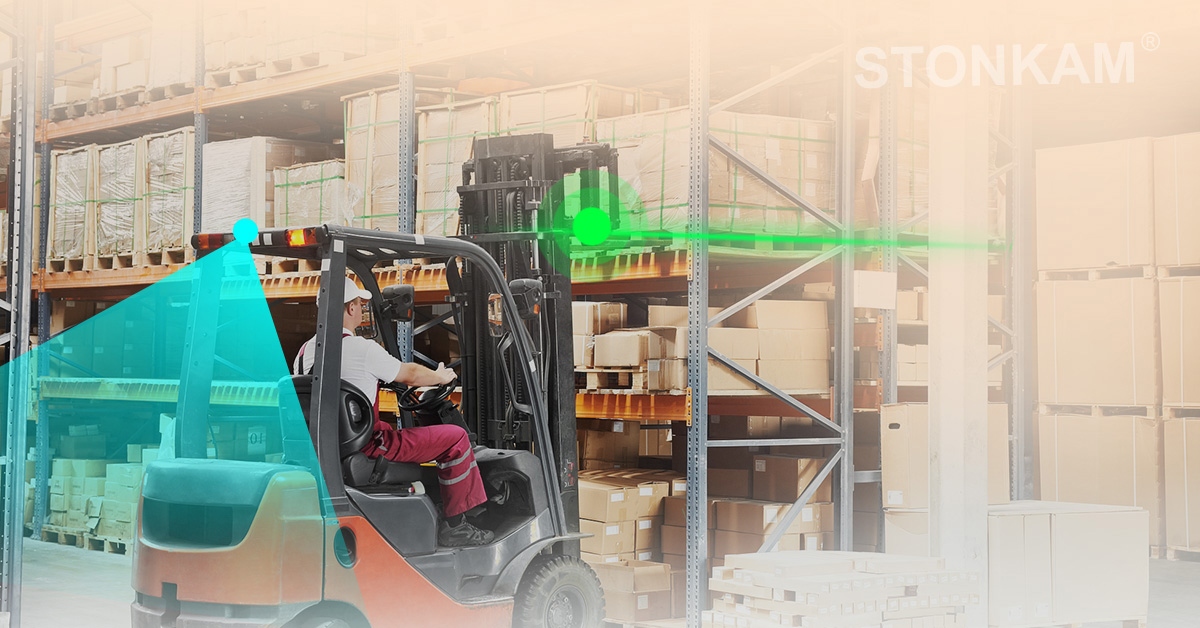
The system consists of an in‑vehicle intelligent recording monitor, HD wireless cameras, and a laser positioning camera. HD digital wireless transmission supports pallet handling assistance, surrounding safety detection, and video recording.
The system detects pallets and uses laser guidance and reference lines to help operators align the forks with the pallet openings. The AI vehicle monitor supports AI pedestrian and vehicle detection, alarm‑triggered recording, and multi‑channel video storage for incident review.
For high‑level stacking operations, camera visibility, pallet recognition, and fork positioning should be verified at different mast heights.
2. Forklift 360° Camera System: Stitched Surround View and AI Pedestrian Alerts
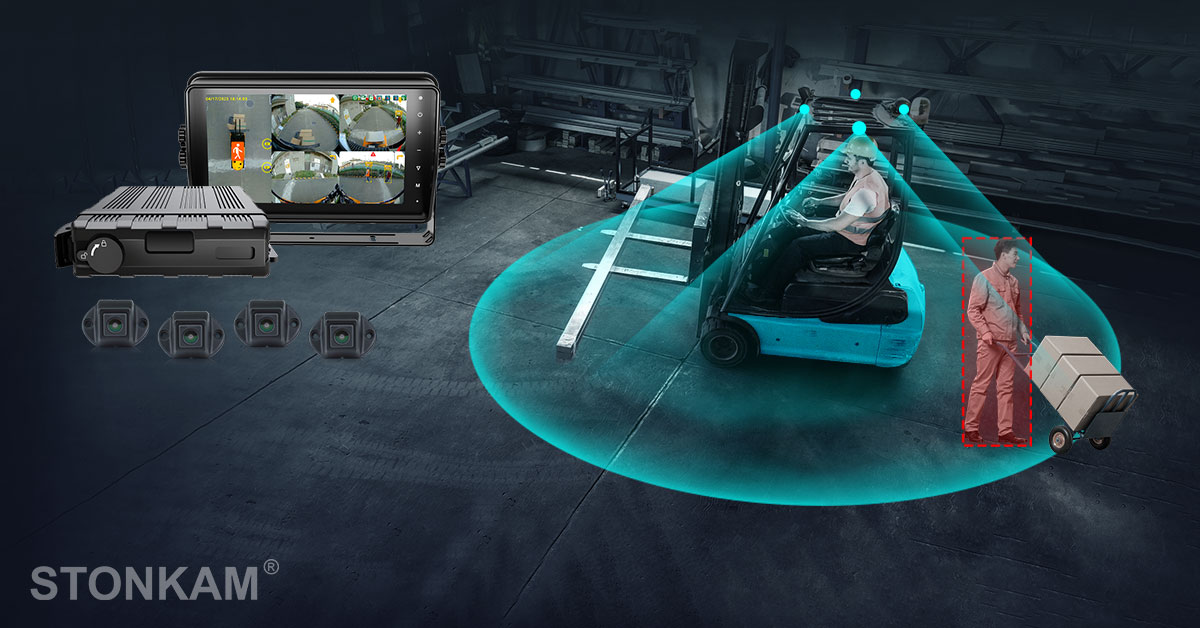
The system uses four waterproof ultra‑wide‑angle cameras mounted above the forklift to capture and stitch surrounding images, providing drivers with a 360° panoramic view.
Built‑in AI algorithms detect pedestrians and provide alerts to support active collision warnings. Multiple camera views provide a more comprehensive picture of the surrounding environment.
For narrow aisles and densely stocked warehouses, camera placement, image stitching, and viewing coverage should be verified during turning and reversing.
3. AI Forklift Collision Avoidance Warning System: AI Pedestrian Detection and Proximity Alerts
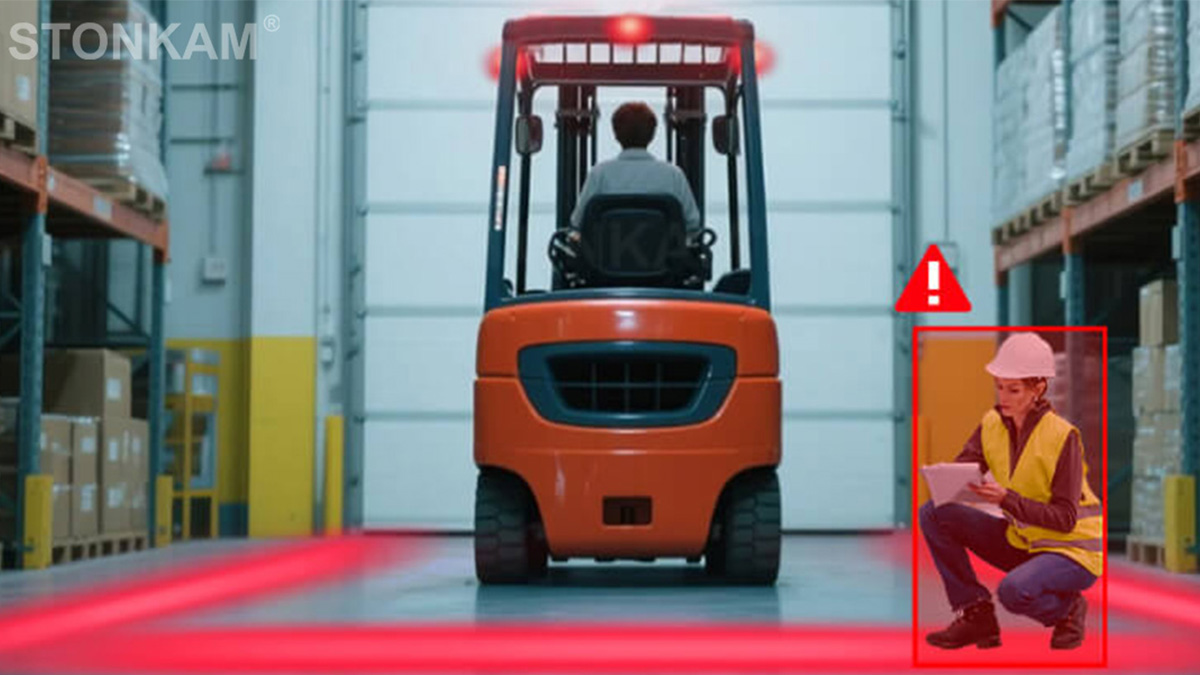
The system combines AI pedestrian detection with three‑sided ground warning lights to monitor designated risk zones around the forklift.
AI cameras detect pedestrians and vehicles within configured areas. When preset alarm conditions are met, warnings are delivered through the onboard monitor or connected audible and visual devices. Ground warning lights project boundaries on both sides and behind the forklift to help nearby personnel identify its operating area. With the corresponding configuration, projected light boundaries can also assist with detection zone calibration.
For deployments at warehouse intersections and loading areas, the key is to verify detection coverage and alarm trigger conditions when the forklift is turning with a load, reversing, and exiting the warehouse, verify the AI detection zones and projected warning boundaries separately under representative operating conditions.
4. Intelligent Forklift Fleet Management System: Integrated Monitoring and Fleet Management
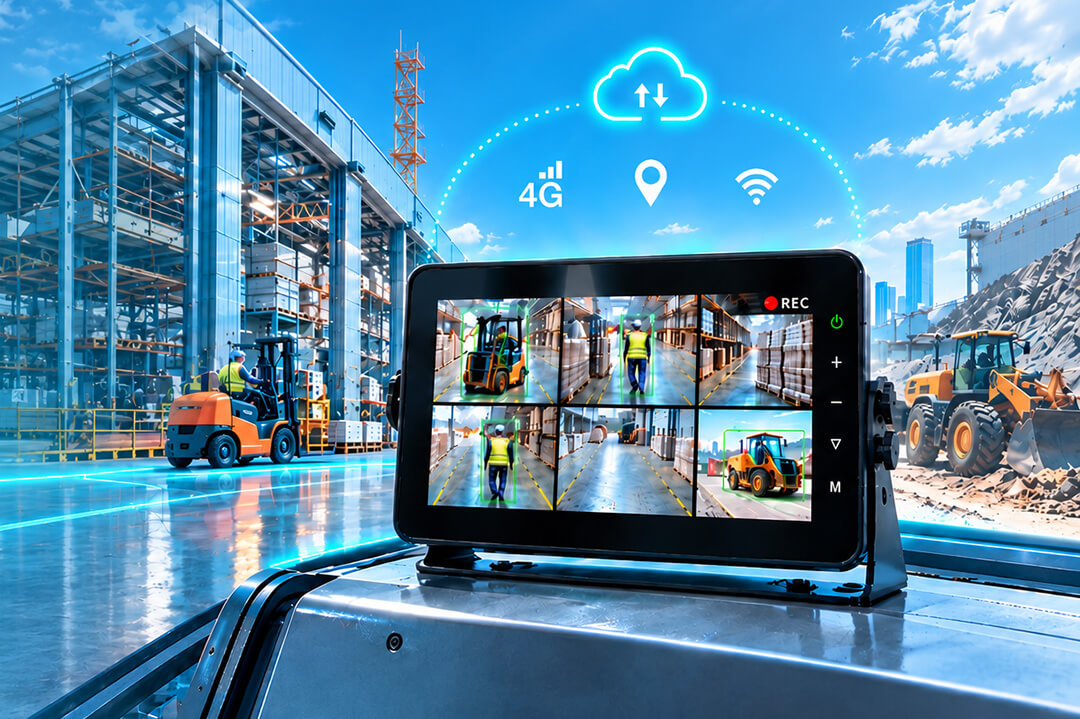
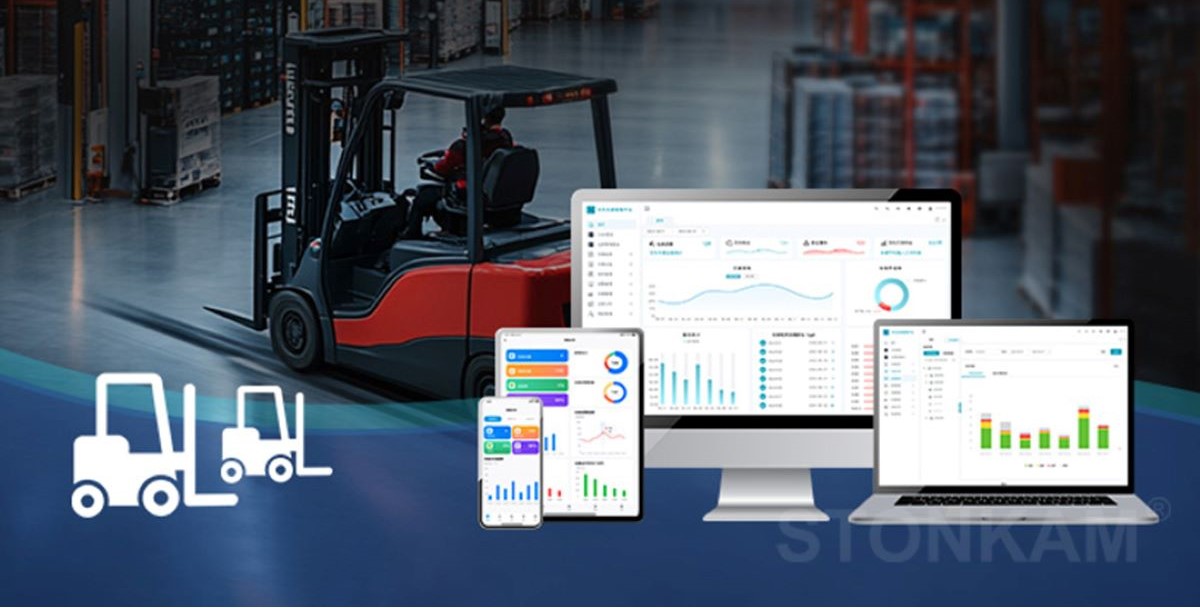
STONKAM solution combines an in‑vehicle intelligent MDVR, AI cameras, GPS and telematics devices, and a cloud‑based fleet management platform to connect vehicle monitoring with centralized fleet operations.
AI MDVR system records video from multiple cameras, while onboard devices collect vehicle location and operating data. Through the cloud platform, fleet managers can monitor multiple forklifts, access live video, manage driver information, receive alerts, and review recorded events. Fleet managers can use operating hours, idle time, and equipment utilization data to plan vehicle scheduling and maintenance.
For multi‑vehicle deployments, key considerations include onboard data collection, video transmission, and integration with the fleet management platform to ensure centralized access to vehicle and operational information.
Retrofit and OEM Integration: How to Deploy AI Forklift Monitoring Systems
STONKAM supports both existing forklift upgrades and new vehicle integration, covering solution configuration, vehicle adaptation, system integration, and project validation.
Three key steps help ensure successful deployment:
● Assess vehicle structure and installation requirements
For retrofit projects, check the forklift model, mast, attachments, lifting height, power supply, and available installation space. For OEM projects, evaluate camera positions, monitor mounting, and interface requirements during vehicle design.
● Confirm connectivity and platform integration
Wireless video transmission between cameras and onboard monitors should be verified. For remote fleet monitoring, compatible communication hardware, network connectivity, and platform access are also required. Third‑party integration should clarify the required vehicle data, alarms, live video, and recordings, followed by verification of interfaces, protocols, and API requirements.
STONKAM has practical experience integrating forklift monitoring systems with a Japanese customer's fleet supervision platform.
● Validate performance before mass deployment
Test representative loads, lifting heights, and driving routes under controlled conditions. Verify camera coverage, detection zones, warning alerts, and event recording. For platform‑connected projects, also confirm that vehicle information, alarms, and video footage can be retrieved and matched correctly.
Forklift Safety and Fleet Management: STONKAM Project Experience
STONKAM provides solution support based on vehicle applications, operating environments, and customer requirements for forklift safety assistance and fleet visibility management:
● Japan Forklift Fleet Management Project:
STONKAM supplied more than 6,000 waterproof MDVR‑based monitoring systems, integrating front and rear HD cameras, driver abnormal behavior data collection, and video recording with the customer's fleet management platform to support vehicle monitoring, hazard alerts, and incident review.
● Europe Forklift Safety Solution Integration Project:
A project partner procured approximately 20,000 sets of STONKAM AI forklift collision avoidance systems for solution integration. Combining AI pedestrian detection, blind spot monitoring, and optional video recording, the solution supports safety monitoring in warehousing, manufacturing, and logistics applications.
Conclusion
Choosing an AI forklift monitoring system requires more than adding cameras or warning devices. The solution needs to match actual operating conditions, whether the priority is fork positioning, 360° visibility, pedestrian collision warnings, or centralized fleet management.
STONKAM provides flexible forklift monitoring configurations for different vehicle types and application requirements, supporting forklift manufacturers, fleet operators, and system integrators with OEM/ODM customization and project integration. These solutions help extend forklift monitoring from individual operating tasks to wider fleet safety and operational management.
-
Choose STONKAM’s 360° forklift camera system if operators primarily need a stitched view for turning and reversing. Choose its AI collision warning system if the priority is to detect pedestrians and vehicles in defined risk zones and alert operators or nearby personnel.
-
Yes. STONKAM AI forklift collision avoidance warning system combines AI detection with three-sided ground warning lights. Projected boundaries help personnel identify the forklift's operating area, while audible and visual alarms provide additional warnings.
-
Yes. With compatible onboard equipment and network connectivity, STONKAM’s forklift fleet management system can centralize vehicle status, video, alerts, and event records. Live viewing and playback depend on the selected hardware and platform configuration.
-
Yes. STONKAM supports forklift retrofit projects, with configurations adapted to vehicle models, mast structures, attachments, power supplies, and installation conditions.
-
Yes, subject to hardware and platform compatibility. STONKAM has integrated MDVR-based forklift monitoring with an existing fleet platform in Japan. For a new project, specify whether you need vehicle status, alerts, live video, or recorded footage so STONKAM can verify the required interfaces.