STONKAM AI Vehicle Monitors: Integrated Design for Industrial Vehicle Safety and Fleet Management
AI Vehicle Monitors for Industrial Vehicles: Enabling Safe Operations and Digital Fleet Management
Industrial vehicles are widely used in logistics, warehousing, construction, mining, and material handling. Limited visibility, confined operating spaces, and interactions between personnel and equipment increase the need for situational awareness, risk detection, and operational information. For businesses, suitable onboard equipment supports safer operations, incident investigation, vehicle monitoring, and fleet management.
As demand for vehicle safety and digital fleet operations grows, onboard monitors are evolving beyond basic video display to integrate AI risk detection, video recording, wireless communication, GPS positioning, and remote management.
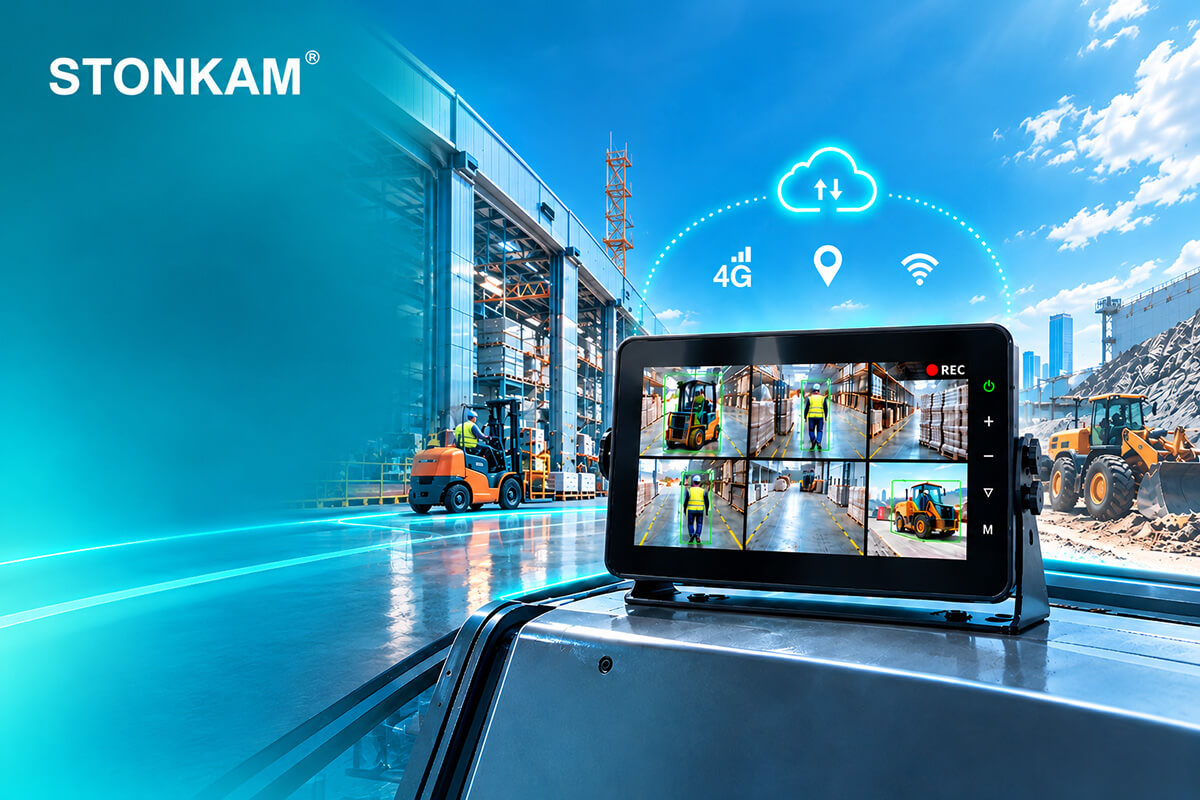
Traditional monitors mainly display camera feeds, while recording, AI detection, and connectivity may require separate devices. STONKAM's integrated AI vehicle monitor combines multiple video inputs, AI detection, real‑time recording, 4G/5G, Wi‑Fi, and GPS, depending on the model and configuration. With compatible cameras and storage media, the system can record surveillance footage without a separate mobile digital video recorder (MDVR). When connected to a compatible management platform, it also supports remote video access, recorded footage playback, and vehicle tracking. Different models offer varying AI detection channels and algorithms to meet industrial vehicles' monitoring, incident review, and fleet management needs.
For vehicle manufacturers, equipment manufacturers, and fleet operators, this integrated design goes beyond combining functions. By coordinating risk detection, video recording, and vehicle information management, STONKAM's AI vehicle monitor provides more comprehensive information support for vehicle safety and fleet operations.
How Does an AI Vehicle Monitor Differ from a Traditional Vehicle Monitor?
Traditional vehicle monitors primarily display video feeds from onboard cameras. When additional capabilities such as AI detection, video recording, or remote fleet management are required, separate devices may need to be installed. Depending on the application, this can increase system design complexity and require additional interface and functional integration between devices.
STONKAM's AI vehicle monitor integrates multiple AI detection channels, real‑time video recording, 4G/5G connectivity, and GPS positioning into a unified onboard solution. This approach brings vehicle monitoring, risk detection, and connected fleet management together in one terminal. The main differences fall into three areas.
● From Basic Video Display to Integrated Functionality
Traditional vehicle monitors primarily display footage captured by onboard cameras, helping drivers observe their surroundings. However, video display alone may not meet the requirements for automated risk detection, operational video recording, or remote vehicle information access. STONKAM's AI vehicle monitor combines video display, AI detection, video recording, and connected fleet management capabilities in a single terminal, helping reduce reliance on multiple standalone devices. For OEMs, system integrators, and fleet operators, this integrated design can simplify equipment installation and connection requirements while making it easier to plan video monitoring, recording, and connectivity functions around a unified onboard system.
● From Real‑Time Viewing to Risk Detection and Incident Review
A traditional vehicle monitor displays real‑time footage of the vehicle's surroundings, but drivers must still observe the images and assess potential hazards themselves. Video display alone does not provide automated risk detection or guarantee that incidents will be recorded. Building on real‑time video display, STONKAM's AI vehicle monitor integrates AI detection and video recording. Depending on the supported algorithms, AI detection can help identify specific risk targets and provide corresponding alerts to drivers. Video recording helps preserve footage of vehicle operations, providing visual evidence for subsequent incident investigations. By combining live monitoring, risk alerts, and historical video footage, businesses can establish a more comprehensive approach to industrial vehicle safety management.
● From Onboard Monitoring to Connected Vehicle and Cloud Management
Traditional vehicle monitors primarily support video viewing inside the vehicle. Businesses that need remote access to vehicle locations, surveillance footage, or fleet information may require additional communication equipment and management systems. With the appropriate connectivity and positioning configuration, STONKAM's AI vehicle monitor can work with compatible management platforms to support remote vehicle location tracking, video access, and related information management. Through 4G/5G connectivity and a compatible platform, fleet managers can remotely check vehicle locations, access live video, and retrieve recorded footage. These capabilities help businesses review operating conditions and investigate incidents involving vehicles at different locations.
In summary, traditional vehicle monitors primarily provide video display, whereas STONKAM's AI vehicle monitor integrates AI detection, video recording, and connected management capabilities. For vehicle manufacturers, system integrators, and fleet operators, the difference lies not only in the number of available functions but also in how vehicle monitoring, safety management, and remote operations can be planned as a complete solution. Businesses can select the appropriate vehicle video monitor configuration based on vehicle type, operating environment, and fleet management objectives.
How Do AI Detection, Video Recording, and Connectivity Work Together?
For industrial vehicles, AI detection, video recording, and connected positioning serve different purposes: identifying potential risks, documenting operations, and transmitting vehicle information. When these functions work together, they create an operational workflow that connects on‑site risk alerts, incident recording, and remote information access.
● Multi‑Algorithm AI Detection for Risk Identification and Alerts
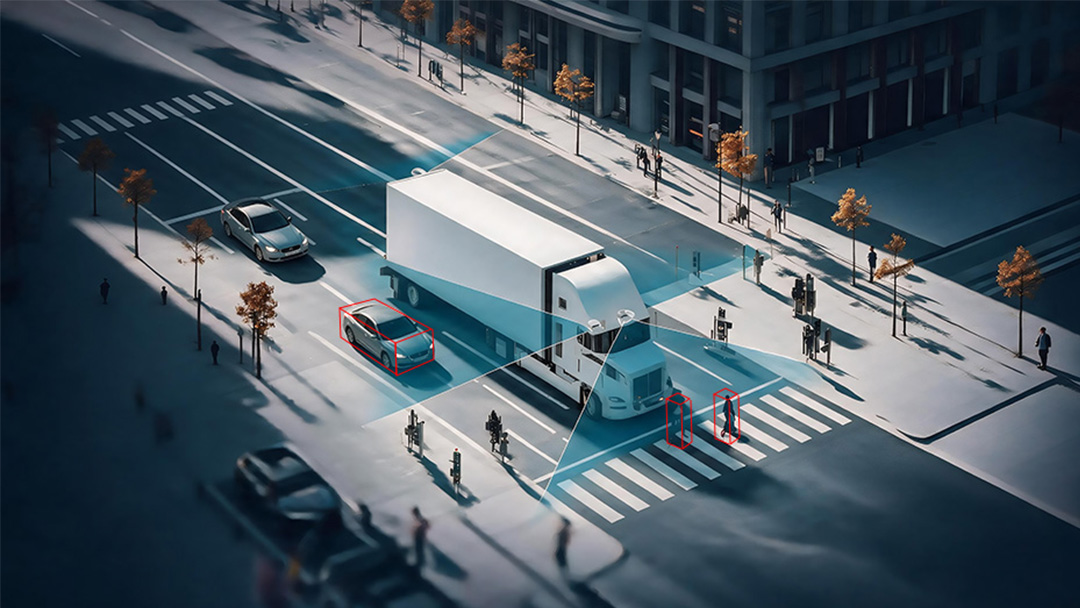
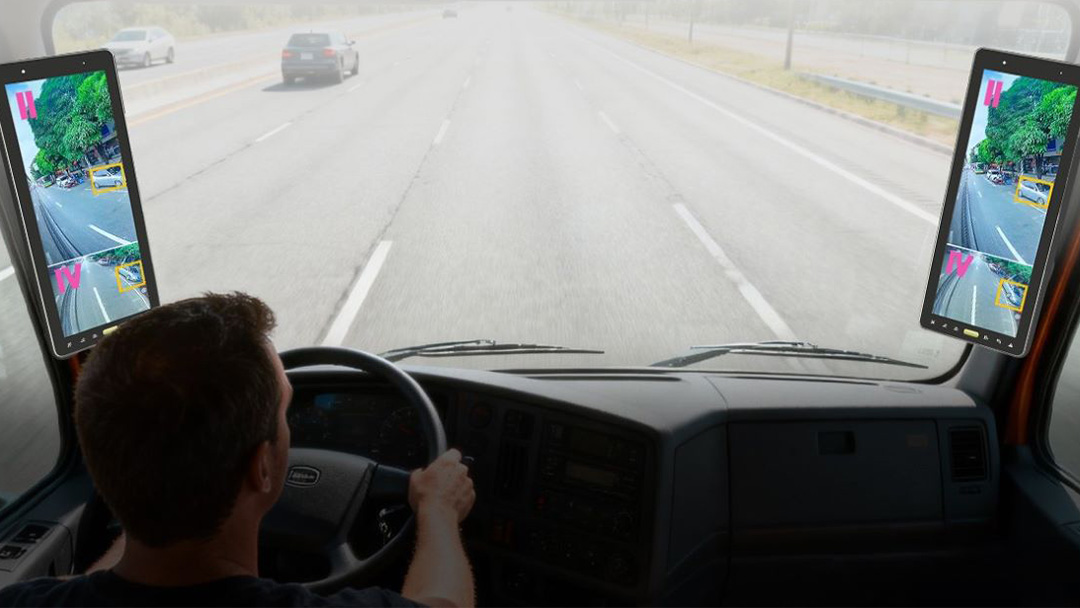
STONKAM's AI vehicle monitor supports 4‑, 6‑, or 8‑channel AI detection, depending on the model and configuration. Supported functions include FCW (Forward Collision Warning), BSD (Blind Spot Detection), and DMS (Driver Monitoring System). FCW helps identify potential forward collision risks while the vehicle is moving. BSD monitors supported pedestrian and vehicle targets in blind spots around the vehicle. DMS identifies supported driver conditions, such as fatigue and distraction. Depending on the selected algorithms and system configuration, the monitor can provide real‑time audible and visual alerts and automatically record AI alarm events. These functions help drivers respond to potential hazards and provide additional support for business safety management.
● Real‑Time Video Recording for Operational Documentation and Incident Review
With integrated video recording, the monitor can capture footage from multiple onboard cameras without requiring a separate MDVR. Large‑capacity video storage can be supported through suitable storage media and the corresponding system configuration. Recorded footage can help businesses investigate incidents, review operating conditions, and analyze how events unfolded. Depending on the storage configuration and supported recording modes, including loop recording and event recording, businesses can retain important operational footage for safety management and operational analysis. This integrated vehicle video monitor helps bring video display and recording together, simplifying the overall equipment configuration while supporting incident traceability.
● Integrated Telematics for Remote Vehicle and Fleet Management
With built‑in 4G/5G connectivity or other supported communication options, the system can connect to a network. GPS provides vehicle positioning information. When connected to a compatible fleet management platform, data such as alarm recordings, GPS tracks, and real‑time video can be transmitted remotely, subject to the system configuration and platform capabilities. Fleet managers can use the platform to check vehicle locations, access live video, or play back recorded footage. This helps businesses monitor geographically dispersed vehicles and supports more efficient fleet management.
In practical applications, these functions can complement one another. For example, when a forklift operates inside a warehouse, BSD can help detect supported targets in blind spots and alert the driver. The corresponding event can be preserved through automatic event recording or regular video recording. Once the vehicle is connected to a network and a compatible management platform, authorized personnel can remotely check its location or access relevant footage to better understand the situation.
This integrated design extends the onboard monitor beyond video display by bringing risk alerts, video recording, and remote information access into one application solution. When selecting an AI vehicle monitor, businesses should evaluate not only AI algorithms, recording channels, and storage capacity but also 4G/5G and GPS configurations, cloud platform compatibility, remote video access methods, and the specific management functions supported.
For applications requiring a larger display and more AI detection channels, STONKAM also offers a 15.6‑inch 2K Ultra HD 8‑channel AI vehicle monitor. Businesses can select the appropriate screen size and detection configuration based on cockpit installation space, camera layout, and priority monitoring areas.
How Can AI Vehicle Monitors Be Adapted to Different Industrial Vehicles?
Industrial vehicles vary in their structures, operating procedures, and risk profiles. Selecting an AI vehicle monitor should therefore be based on the actual application requirements rather than applying a standard configuration to every vehicle.
● Forklifts and Warehouse Logistics: Improving Collision Prevention
In warehouses with dense racking, narrow aisles, and interactions between pedestrians and vehicles, restricted visibility and limited maneuvering space can increase the risk of collisions involving forklifts. By combining appropriately positioned cameras, AI detection, and multi‑channel video display, an AI vehicle monitor can help identify supported pedestrian and vehicle targets around the forklift and provide timely alerts. This helps drivers maintain better awareness of their surroundings and reduces collision risks during operations involving both people and equipment. For fleets operating multiple forklifts, connectivity equipment and a compatible forklift management platform can also support vehicle information access, video playback, and AI event management, helping businesses improve safety oversight and investigate abnormal events.
● Mining Trucks and Underground Vehicles: Environmental Adaptability and Video Coverage
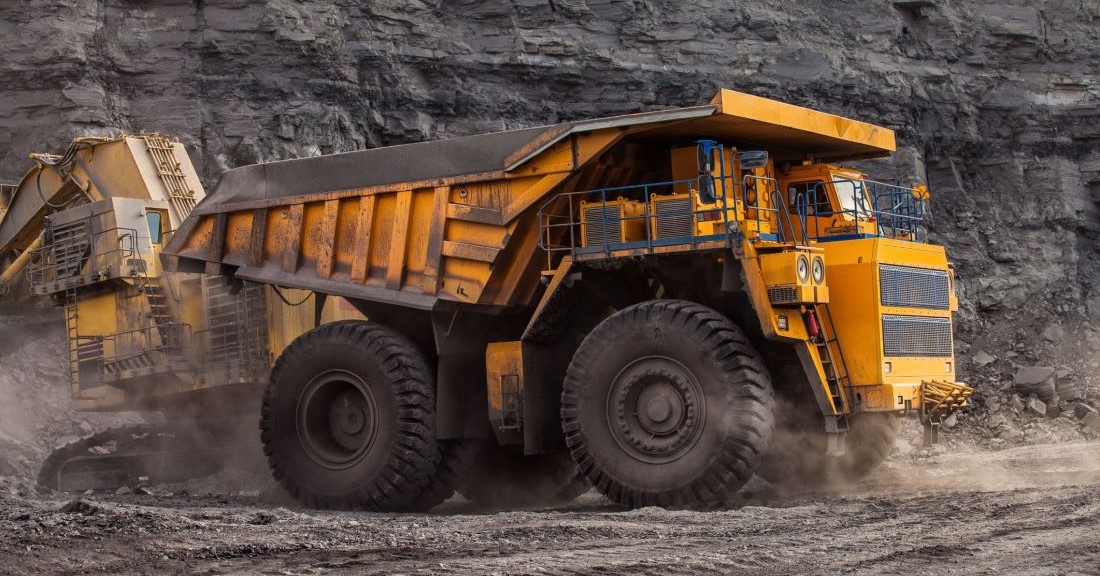
Mining trucks, underground loaders, and other mining vehicles often operate in environments with limited lighting, dust, vibration, and challenging working conditions. When designing a monitoring solution, businesses should consider the environmental suitability of the cameras and onboard monitor, installation protection, power supply requirements, and video coverage. These factors help drivers monitor the areas around the vehicle and critical operating zones. For projects requiring remote fleet management, network coverage and data transmission conditions should also be evaluated to ensure that the video monitoring equipment, communication links, and management platform are suitable for the actual operating environment.
● Construction Machinery and Special Vehicles: Operational Visibility and System Integration
For excavators, wheel loaders, lifting equipment, material‑handling vehicles, and rail maintenance vehicles, camera and monitor configurations can be tailored to the vehicle structure, working range, and equipment movements. Multiple cameras can cover areas around the vehicle, equipment operating zones, and critical work areas, helping drivers observe surrounding conditions and reducing the impact of blind spots on operational safety and efficiency. Depending on the project requirements, AI detection, video recording, and video telematics can be incorporated to support on‑site monitoring, incident review, and remote fleet management.
How to Choose the Right AI Vehicle Monitor
For vehicle manufacturers, equipment manufacturers, fleet operators, and system integrators, selecting an AI vehicle monitor requires more than evaluating screen size and basic display functions. The following factors should also be considered.
● Vehicle Structure and Installation Requirements: Confirm available installation space, power supply requirements, driver viewing angles, and camera placement.
● Video Display Requirements: Determine the number of cameras, available video channels, preferred screen layouts, and whether video recording and event playback are required.
● AI Detection Requirements: Identify the target types to be detected, alert logic, applicable operating environments, and functional limitations of the selected algorithms.
● Vehicle Data and Interfaces: Verify vehicle communication interfaces, data protocols, external equipment requirements, and OEM integration specifications.
● Connectivity and Platform Capabilities: Confirm communication modules, network coverage, platform compatibility, and the actual scope of remote management functions.
● Environmental Suitability: Evaluate operating temperature, vibration resistance, ingress protection, and other environmental requirements based on the intended application.
For projects requiring multiple functions, businesses should clearly distinguish standard features, optional configurations, and platform‑dependent capabilities during the selection process. This helps avoid assuming that functions available on one model are standard across the entire product range.
STONKAM works with vehicle manufacturers, system integrators, and fleet operators to evaluate suitable solutions based on vehicle structure, monitoring coverage, and management requirements. Providing details such as vehicle models, camera quantities, AI detection requirements, video retention needs, and the target management platform can help streamline the selection of an appropriate AI vehicle monitor and its associated system configuration.
From Individual Vehicle Monitoring to Integrated Intelligent Fleet Operations
As industrial vehicle safety and digital fleet management demands grow, onboard monitors are evolving beyond video display toward integrated information management and interaction. For businesses, integrating these functions helps coordinate on‑site monitoring, risk alerts, incident review, and vehicle management.
STONKAM offers vehicle monitors and intelligent onboard solutions for forklifts, construction machinery, mining transportation vehicles, and other applications. Businesses can select suitable configurations and integration options based on vehicle structure, operating environment, functional requirements, and vehicle interfaces.
Industrial vehicle digitalization is not simply about adding functions, but ensuring that video, perception, information interaction, and management systems work together within actual operating procedures to support safety practices and operational workflows. By integrating AI vehicle monitors with compatible cameras, connectivity, and management platforms, businesses can develop monitoring solutions tailored to their vehicles and operational needs.
-
STONKAM's 6-channel AI vehicle monitor integrates multi-channel video display, AI detection, real-time video recording, 4G/5G connectivity, Wi-Fi, and GPS positioning in one terminal, depending on the model and configuration. Compared with traditional monitors focused primarily on video display, this integrated design can reduce the need for separate recording, AI processing, and communication devices.
-
STONKAM AI vehicle monitors offer different AI algorithms and configurations. Industrial vehicles such as forklifts, construction machinery, and mining vehicles can support FCW, BSD, and DMS, while commercial vehicles such as trucks and buses may additionally support ADAS and APC for passenger counting. Available detection channels and algorithms depend on the model and configuration.
-
No separate MDVR is required for video recording when using a compatible STONKAM AI vehicle monitor with integrated recording functionality. With compatible cameras and storage media, the system supports multi-channel, loop, and event recording, depending on the model. Remote video uploads are also available with compatible connectivity and a cloud management platform.
-
With supported 4G/5G connectivity and a compatible fleet management platform, STONKAM AI vehicle monitors enable vehicle status monitoring, operational data analysis, alarm notifications, vehicle location tracking, live video access, and recorded footage playback, depending on system and platform capabilities.
-
Depending on the model and project requirements, STONKAM AI vehicle monitors can be used in forklifts, construction machinery, mining transportation vehicles, and other industrial applications, supporting collision prevention, multi-channel video monitoring, AI detection, video recording, and fleet operations.
-
Businesses should consider screen size, video input channels, AI algorithms, recording and storage options, connectivity, management platform compatibility, vehicle interfaces, and operating environment. Defining vehicle types, application scenarios, monitoring requirements, and fleet management objectives helps ensure the selected configuration meets project needs.