360° Around View Systems for Tractors and Combine Harvesters: Reducing Blind Spot Risks
What Visibility and Safety Challenges Do Agricultural Machines Face?
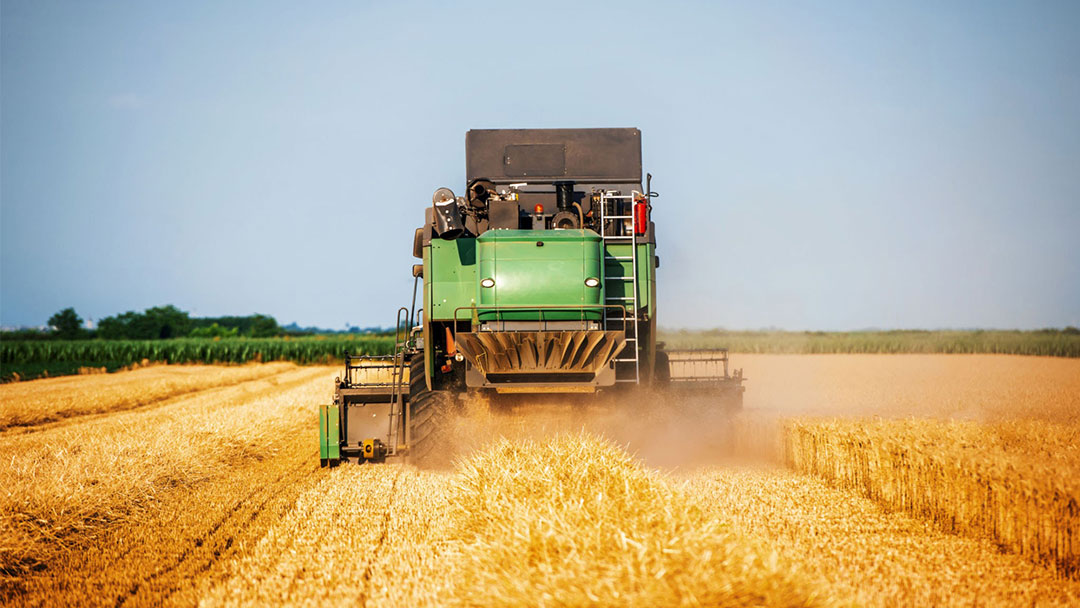
Large agricultural machinery such as tractors with attached seeders or tillers, and combine harvesters can have limited visibility because of their size and attached implements.
● Vehicle bodies and implements create blind spots:Seeders, rotary tillers, headers, and other implements can restrict rear and side visibility.
● Reversing and turning increase collision risks:People, vehicles, and other agricultural machinery may enter operating areas where drivers have limited visibility.
● Critical operating areas are difficult to monitor:Seeding rows, hitching points, headers, and other implement areas may not be directly visible from the cab, making timely adjustments more difficult.
● Dust and low‑light conditions further reduce visibility:Dust, mud, rain, fog, and nighttime operations can make surrounding conditions harder to assess.
● GPS positioning cannot show actual field conditions:For farms and agricultural cooperatives operating multiple machines, GPS or BeiDou can provide vehicle locations but cannot show what is happening around each machine.
These conditions make surrounding visibility and situational awareness important considerations when selecting safety and camera systems for agricultural machinery.
How Can STONKAM 360 Around View System Be Applied to Agricultural Machinery?
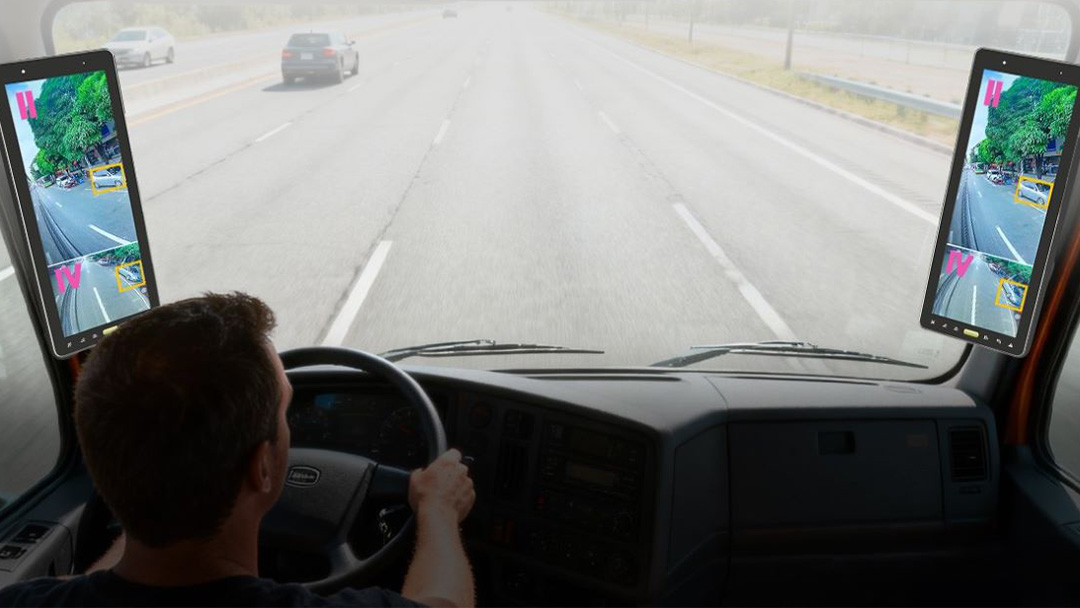
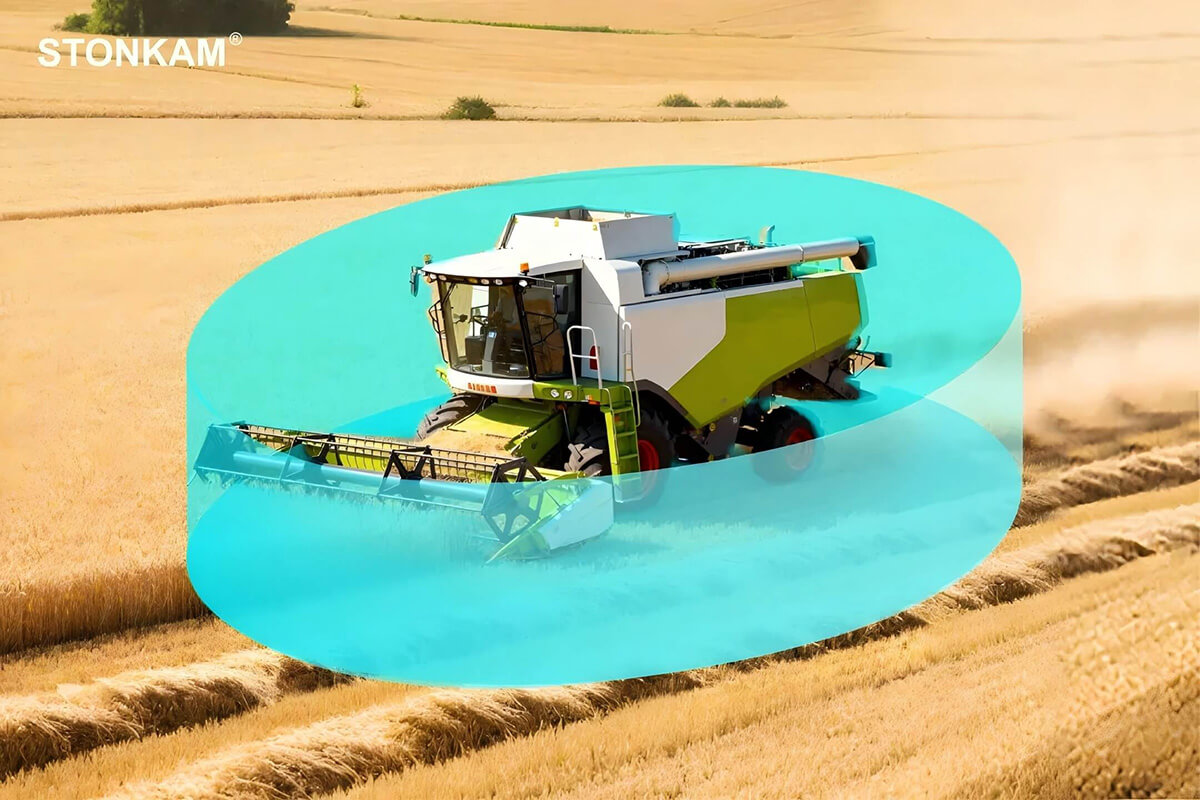
STONKAM 360 around view monitor(AVM) system uses multiple cameras to capture the vehicle's surroundings and combines image correction and stitching to display a panoramic view on an in‑vehicle monitor. This helps drivers understand the relative positions of people, obstacles, vehicles, and implements around the machine.
The camera count, installation positions, display method, and intelligent warning functions should be configured according to the vehicle and operating conditions. For tractors, the rear, hitching area, and sides may require particular attention. For combine harvesters, the header and grain unloading system should also be considered when planning camera positions.
A 360 around view system primarily provides surrounding‑area visibility and risk awareness. If continuous monitoring of seeding mechanisms, headers, hitching points, or other implement operating areas is required, dedicated cameras should be added according to the actual application.
How Does STONKAM 360 Around View System Improve Blind Spot Safety for Agricultural Machinery?
Tractors, combine harvesters, and other agricultural machinery have limited visibility around the vehicle and implements during field operations, reversing, turning, and vehicle transfer.
For these typical scenarios, STONKAM 360 AVM system combines panoramic vision, AI detection, and multi‑sensor integration to provide surrounding‑area awareness and active warning capabilities for agricultural machinery.
●Panoramic Views for Better Visibility Around the Machine
During harvesting and seeding, people, vehicles, and equipment may be present around agricultural machinery. STONKAM 360 AVM system uses front, rear, left, and right wide‑angle cameras to capture synchronized video. Image stitching and distortion correction create a unified bird's‑eye view, helping drivers monitor the area around the machine and reduce blind spots.
●AI Detection for Specific Operational Risks
For areas where people and agricultural machinery operate together, AI detection can identify pedestrians and vehicles and provide warnings when they enter defined monitoring zones. Detection targets, zones, and warning methods should be configured for the application and tested with implements attached and during turning.
●Evaluate Side Blind‑Spot Warning and Radar Integration
For machinery that frequently transfers between fields or operates near other vehicles in confined areas, side blind‑spot monitoring can be evaluated. Compatible radar can also be considered for low‑light, dusty, or other challenging conditions.
The configuration and actual performance of these functions depend on the selected model, installation design, and on‑site testing. Drivers should continue to operate the machinery based on direct observation, operating procedures, and appropriate personnel separation measures.
Which 360 Around View Functions Can Improve Agricultural Machinery Operations?
The efficiency of large agricultural machinery depends not only on field operations, but also on equipment deployment, video integration, and fleet management.
For tractors, combine harvesters, and other agricultural vehicles, the STONKAM 360° around view system can support operations in the following areas:
● One‑minute automatic calibration for faster deployment:Selected STONKAM systems support approximately one‑minute automatic calibration and automatic ground‑plane correction, reducing manual adjustment and shortening on‑site deployment time.
● Seamless stitching for more precise operation:During implement attachment, reversing, turning, and U‑turns, the panoramic view helps drivers understand the relative positions of the vehicle, implement, and surrounding environment, reducing repeated adjustments.
● RTSP video output for easier platform integration:STONKAM 360 AVM systems support RTSP video streaming, allowing the integrated 360° panoramic view to be transmitted in real time to existing devices, remote monitoring platforms, or third‑party management systems.
● 4G remote management for fleet operations:Through a 4G connection to a remote management platform, fleet managers can remotely view vehicle video and operating status. Video can also support incident verification, dispatching, maintenance, and event review.
The value of a STONKAM 360 around view system goes beyond simply helping drivers see more of the surrounding environment. It can also support more precise operations, faster deployment, and remote coordination.
How Should STONKAM 360 Around View System Be Configured for Different Agricultural Machinery?
Agricultural machinery varies significantly in vehicle structure, implement configuration, and operating movements. STONKAM 360 around view solution should first identify the areas that drivers need to observe and then determine the camera layout and whether additional cameras are required for critical operating areas.
|
Agricultural Machinery & Operating Scenario |
Key Areas to Monitor |
Main Role of the 360 Around View System |
|
Tractor with seeder or rotary tiller |
Rear, hitching area, and inner side during turns |
Supports reversing alignment, low‑speed turning, and surrounding‑area observation |
|
Combine harvester during harvesting and grain transfer |
Around the vehicle, header area, and grain unloading side |
Supports headland turns and coordination with grain transport vehicles |
|
Large boom sprayer entering or leaving fields |
Both sides and areas affected by the spray boom |
Helps assess the position of wide implements relative to field edges and obstacles |
|
Multiple agricultural machines operating as a fleet |
Vehicle surroundings and locations where abnormal events occur |
Combined with suitable video recording and communication configurations, supports incident verification |
The functions above primarily focus on visibility around the vehicle. If continuous monitoring of the seeding mechanism, header, hitching point, or other implement operating conditions is required, dedicated monitoring cameras should be added based on actual obstruction conditions. AI detection and remote viewing capabilities should also be confirmed according to the selected configuration.
What Should Buyers Consider When Selecting a 360 Around View Solution for Agricultural Machinery?
Agricultural machinery varies in vehicle size, implement layout, and viewing needs. STONKAM configures 360 around view systems, cameras, and displays based on the machine and operating conditions.
● Separate Surrounding Visibility from Implement Monitoring
360 around view monitor system covers people, vehicles, and obstacles around the machine. Dedicated cameras can monitor areas such as headers, seeding mechanisms, and hitching points.
● Match AI Warnings to Operational Risks
For mixed people‑and‑machinery areas, pedestrian and vehicle detection or side blind‑spot warnings can be configured. Radar integration can also be evaluated for compatible applications.
● Verify calibration and equipment connectivity
Selected STONKAM 360° products support automatic calibration in approximately one minute and RTSP video output. Buyers should confirm these functions for the proposed model and test connections to the required display, recorder or management platform.
● Adapt the Camera Layout to Each Machine
For tractor or combine harvester camera system, camera layout and functions can be configured according to vehicle structure, implement position, and operating conditions. Image quality and warning performance should be tested during reversing, turning, and implement operation.
Conclusion
Agricultural machinery blind spots change with vehicle structure, attached implements and operating position. A STONKAM 360° around view solution can help operators observe the area around a tractor or combine harvester during hitching, reversing, headland turns and movement between fields. Dedicated implement cameras, AI warnings and remote viewing should be evaluated separately for the intended machine and project.
For an OEM integration or fleet retrofit project, share the machine model, implement configuration, typical operating movements and existing display or recording interfaces with STONKAM. These details will help the team assess camera placement and system integration.
-
A combine harvester may need multiple cameras depending on its size, structure, and visibility requirements. A 360 AVM system typically uses multiple cameras to cover the front, rear, and sides, with the final camera count determined by the machine configuration and required coverage.
-
Calibration aligns the images from cameras installed around the machine to create a usable panoramic view. Selected STONKAM models support automatic calibration in approximately one minute.
-
Yes. STONKAM 360 AVM system supports multiple communication protocols and flexible system architectures, enabling integration with different agricultural machines, displays, recording systems, and management platforms. This allows equipment manufacturers and operators to deploy scalable vision solutions across various applications.
-
Yes. STONKAM designs agricultural vision systems for demanding outdoor conditions, including dust, vibration, changing weather, and variable lighting environments. Flexible hardware configurations help maintain reliable performance across different farming operations and equipment types.
-
Key factors include camera coverage, image stitching, calibration, environmental durability, video interfaces, and system compatibility. STONKAM agricultural vehicle 360 AVM solutions support flexible camera configurations, 360° panoramic imaging, AI detection, fast calibration, and RTSP video output for different agricultural machinery.